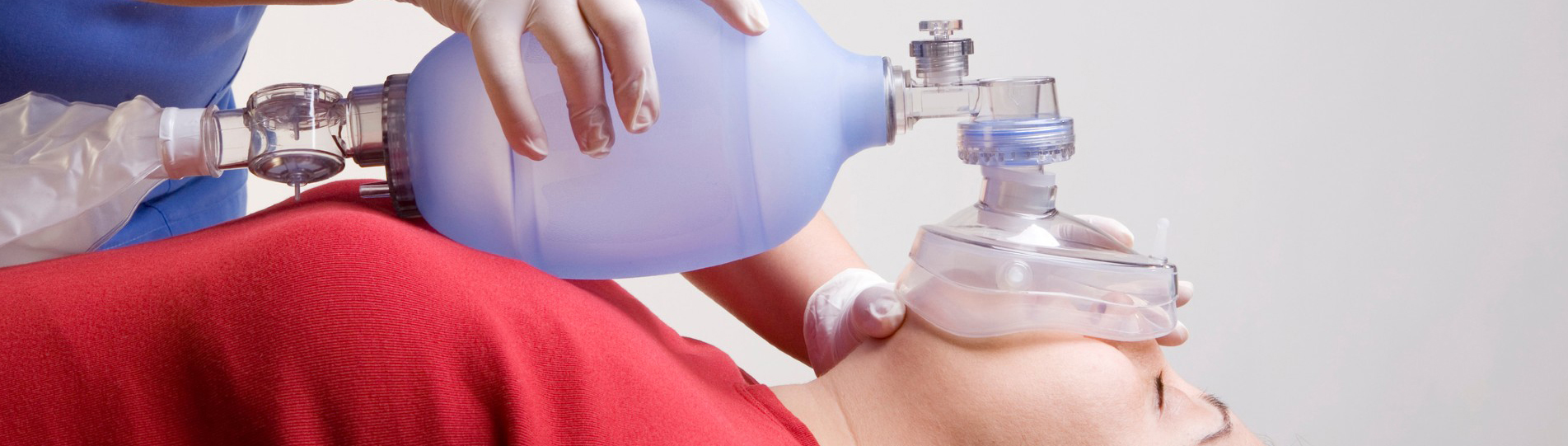

Kalp durması hiç beklemeden gelir. İlk dakikalardaki tepkiniz hayatta kalmayı belirler. Cep maskesi, suni solunumu güvenli ve hijyenik bir eyleme dönüştürür. Hayati önem taşıyan oksijeni sağlarken sizinle kurban arasında bir bariyer oluşturur.
Olay yerinde acil sağlık ekiplerinin bulunmadığı hastaların hastaneden taburcu edilme oranı %8,5'tir. Bunlardan, olay yerinde kalp masajı yapılan hastaların genel hayatta kalma oranı (%11,2), kalp masajı yapılmayanlara (%7,0) göre daha yüksektir.
Doğru teknik üç unsur gerektirir: konumlandırma, sızdırmazlık ve havalandırma. Bu kılavuz, tek başına ve iki kurtarıcı senaryolarının yanı sıra çocuk ayarlamalarını da kapsamaktadır. Pratik yaparak, cep tipi CPR maskesini güvenle kullanmayı öğrenebilirsiniz.CPR cep maskesiBir hayat kurtarabilir. Taşıdığınız her cep maskesi, hazırlıklı olmanın bir göstergesidir.
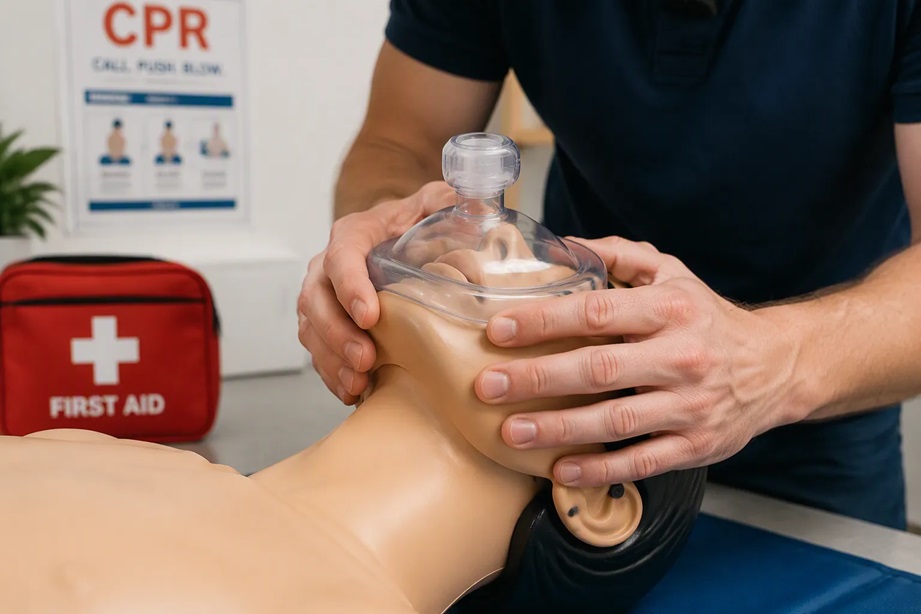
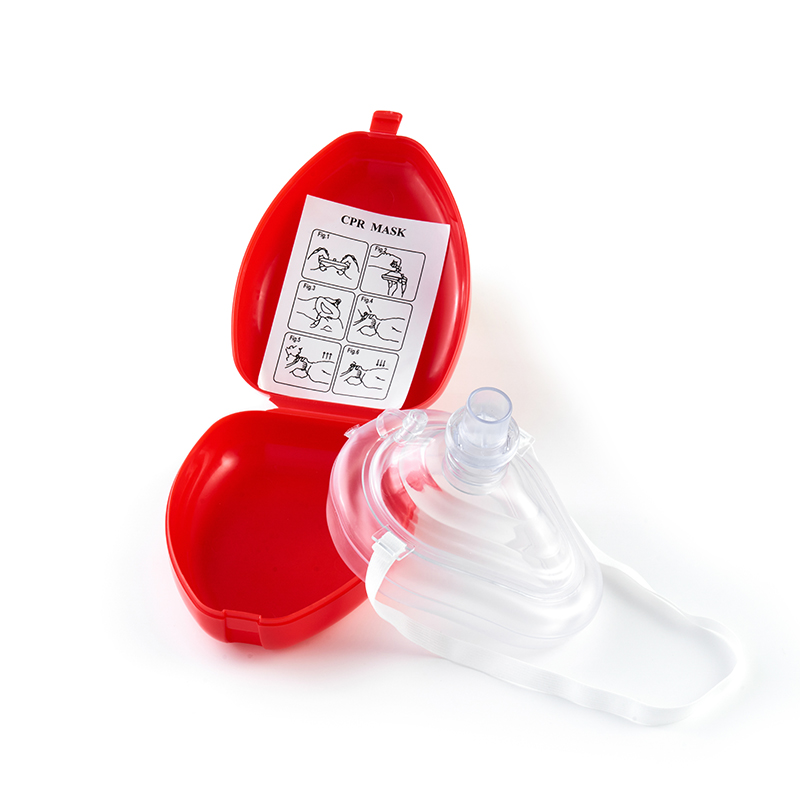
Cep maskesi, kompakt ve hayat kurtaran bir cihazdır. Peki, tam olarak bir CPR cep maskesi nedir diye merak edebilirsiniz. Dayanıklı silikon veya yüksek yoğunluklu plastikten yapılmış esnek bir yüz parçasından oluşur. Ortasında, havalandırma portuna bağlanan tek yönlü bir valf bulunur. Bu basit tasarım, kurtarma nefeslerini güvenli ve etkili bir şekilde vermenizi sağlar. Taşıdığınız her cep maskesi, acil bir duruma hazırlıklı olduğunuzu gösterir.
Tek yönlü valf, herhangi bir kalp masajı maskesinin en kritik bileşenidir. İki temel işlevi yerine getirir:
Bu bariyer, suni solunum sırasında çapraz bulaşma riskini önemli ölçüde azaltır. Bu valf olmasaydı, kurbanın nefesinden çıkan havaya ve potansiyel patojenlere doğrudan maruz kalırdınız.
Şeffaflık da hayati önem taşıyan bir özelliktir. Şeffaf bir maske, kurbanın ağzını ve burnunu görmenizi sağlar. Sızdırmazlığı bozmadan göğüs yükselmesini izleyebilir ve tıkanıklıkları kontrol edebilirsiniz. Birçok modelde oksijen giriş portu bulunur. Bu port, daha yüksek konsantrasyonlu oksijen verilmesi için bir oksijen hortumu takmanıza olanak tanır. Aşağıdaki tablo farkı göstermektedir:
|
Özellik |
O2 olmadanGiriş |
O2 Girişi ile |
|---|---|---|
|
Oksijen bağlanması |
Hortum takılamaz. |
Hortum, O2 girişinden bağlanır. |
|
Oksijen dağıtımı |
Kurtarıcının sadece nefesinden çıkan hava. |
Hastaya daha yüksek oksijen konsantrasyonu sağlanır. |
Renk kodlu bedenlendirme, doğru maskeyi hızlıca seçmenize yardımcı olur. Pembe bebek bedenini, mavi çocuk bedenini ve şeffaf ise yetişkin bedenini gösterir. Sert çerçeve, göğüs kompresyonları sırasında ellerin doğru yerleştirilmesini destekler.
Hangi özelliklerin en önemli olduğu sizin rolünüze bağlıdır. Şu kılavuzu inceleyin:
|
Kullanıcı Türü |
Önerilen Özellikler |
Tipik Kullanım Ortamı |
|---|---|---|
|
Acil Tıp Teknisyenleri, Paramedikler, Sağlık Çalışanları |
Baş bandı, oksijen girişi, yetişkin/çocuk maskeleri |
Ambulanslar, hastaneler, klinikler |
|
Eğitimli siviller, antrenörler, güvenlik personeli |
Kompakt case, tek beden maske, anahtarlık seçeneği |
Araçlar, iş yerleri, spor salonları |
|
CPR eğitmenleri, kurumsal eğitimciler |
Çeşitli maskeler, tanıtım modelleri, değiştirilebilir valfler |
Eğitim tesisleri, okullar |
|
Acil durum ekipleri, afet müdahalesi |
Çeşitli boyutlarda, toplu ambalajda çok sayıda maske |
Kitlesel can kayıplarına yol açan olaylar, halka açık mekanlar |
Hastaneler ve acil sağlık hizmetleri kuruluşları, maskelerin sızdırmazlık kalitesini, enfeksiyon kontrol özelliklerini, mevcut ekipmanlarla uyumluluğunu ve mevzuata uygunluğunu değerlendirmelidir. Eğitim desteği ve tedarik hizmetleri de dahil olmak üzere uzun vadeli sözleşme değeri de kritik öneme sahiptir. Alıcıların bütçe kısıtlamalarını klinik performans ve güvenilirlikle dengelemelerine yardımcı olmak için, yalnızca birim fiyatı değil, CPR Maskeleri pazarındaki şirketlerin toplam sahip olma maliyetini karşılaştırmak önemlidir.
Ataşınabilir CPR maskesiİlk yardım çantanıza veya torpido gözünüze kolayca sığmalıdır. Tianzuo Medical, hem profesyonel hem de kişisel kullanım için uygun, yüksek kaliteli ve dayanıklı cep maskeleri sunmaktadır. Ürünleri yukarıda bahsedilen temel özellikleri içermektedir. Cep maskenizi seçerken, sızdırmazlık bütünlüğüne ve valf güvenilirliğine öncelik verin. İyi seçilmiş bir maske, acil durumlarda güvenilir bir araç haline gelir.
Kalp durması vakasına tek başınıza müdahale ederken, pozisyonunuz etkinliğinizi belirler. Kurtarıcıların sefalik pozisyon dediği şekilde, kurbanın başının üst kısmında diz çökün. Bu pozisyon sizi doğrudan yüzün üzerine yerleştirir ve hem maske yerleştirme hem de göğüs kompresyonları için net bir görüş alanı sağlar. Bu avantajlı konumdan, vücudunuzu hareket ettirmeden kompresyonlar ve nefesler arasında geçiş yapabilirsiniz. Ayrıca, her havalandırmada göğsün yükselişini izlemek için kurbanın göğsünün tamamını görebilirsiniz.
Cep maskenizin kurbanın yüzündeki konumu, işlevsel bir sızdırmazlık ile başarısız bir girişim arasındaki farkı yaratır. Doğru tekniği elde etmek için şu adımları izleyin:
Maskenin en alt kenarını alt dudak ile çene arasına yerleştirin.
Maskenin sivri tarafını burnunuzun üzerine yerleştirin.
Hava geçirmez bir sızdırmazlık sağlamak için maskenin kenarlarını kurbanın yüzüne sıkıca bastırın.
Center the pocket mask over the victim's nose and mouth, ensuring that it covers both areas completely to prepare for a secure seal.
The mask's shape guides you naturally. The narrow end fits over the nasal bridge, while the wider portion covers the mouth. When you position the mask correctly, you do not need to pinch the victim's nose shut. The mask itself creates the seal around both openings. Use your thumbs to press down on the sides of the mask while your fingers lift the jaw upward. This maneuver opens the airway and maintains the seal simultaneously. Your grip should remain firm but controlled, avoiding excessive pressure that could distort the mask's shape.
With the mask sealed, you can begin rescue breathing. Tilt the victim's head back slightly to open the airway, then deliver each breath over one full second. Watch the chest rise with each breath you give. The chest should visibly lift, indicating that air enters the lungs. If the chest does not rise, reposition the mask and re-tilt the head before trying again.
The ventilation rate for adult CPR follows a specific rhythm:
This ratio means you perform 30 compressions, then pause briefly to deliver two breaths. The pause should last no longer than 10 seconds to minimize interruptions in blood flow. After each breath, allow the chest to fall completely before giving the next one. This passive exhalation prevents air trapping and prepares the lungs for the following breath.
Your cpr pocket mask serves as your primary tool for effective ventilation during solo resuscitation. The one-way valve ensures that the air you deliver reaches the victim without exposing you to their exhaled breath. This protection allows you to focus on the task rather than worrying about contamination.
Mastering these instructions transforms your portable CPR mask from a passive accessory into an active life-saving instrument. Practice the positioning and breath delivery until they become muscle memory. When you use pocket cpr mask techniques correctly, you provide the victim with the oxygen their brain and heart desperately need. Your airway control during these critical moments directly influences the outcome of the resuscitation effort. Each breath you deliver represents a deliberate, skilled action that keeps the victim alive until advanced help arrives.
Two-rescuer CPR changes the dynamics of resuscitation. One person handles airway control while the other maintains blood flow through compressions. This division of labor reduces fatigue and improves the quality of both ventilations and chest compressions. The cpr pocket mask becomes the central tool for the rescuer managing the airway.
Rescuer 1 kneels beside the victim's chest and performs compressions. Rescuer 2 positions themselves at the victim's head, holding the pocket mask in place. This cephalic position gives you a direct line of sight to monitor chest rise with each breath.
Your role as the airway rescuer demands both hands on the mask. Place your thumbs along the sides of the mask and your fingers under the victim's jaw. Lift the jaw upward while pressing the mask firmly against the face. This dual action opens the airway and creates an airtight seal simultaneously. You do not need to pinch the nose because the mask covers both the nose and mouth completely.
The 2005 Emergency Cardiac Care guidelines for basic life support (BLS) recommend a compression to ventilation ratio of30:2for two-rescuer CPR. Although the source specifically mentions a bag-valve mask, the same ratio applies when using a pocket mask, as the ratio is device-independent and based on minimizing no-flow time.
Maintain your grip throughout the entire resuscitation. A loose seal allows air to escape, reducing the effectiveness of each breath. Your partner depends on your airway control to deliver oxygen efficiently.
The 30:2 ratio forms the backbone of your coordination. Rescuer 1 delivers 30 compressions at a rate of 100–120 per minute, with a depth of 2–2.4 inches and full chest recoil. After the 30th compression, Rescuer 1 pauses briefly. You then deliver two rescue breaths, each lasting one second, watching for visible chest rise.
Timing matters more than you might expect. Research shows that using a pocket mask significantly reduces the time needed for each ventilation compared to mouth-to-mouth. The table below illustrates this difference:
|
Metric |
Pocket Mask |
Mouth-to-Mouth |
|---|---|---|
|
Time per ventilation cycle |
0.923 sec (±0.432) |
1.021 sec (±0.535) |
|
Delay before restarting compressions |
9.88 sec (±2.831) |
10.21 sec (±4.112) |
The pause between the last breath and the resumption of compressions must stay under 10 seconds. Studies indicate that the group performing mouth-to-mouth ventilation exhibited longer interruptions in chest compressions compared to the group using a pocket mask. This finding aligns with the American Heart Association guidelines, which recommend not exceeding 10 seconds between completing two rescue breaths and initiating chest compressions. Your pocket mask helps you stay within this timeframe, optimizing the compression cycle.
Follow this sequence for smooth coordination:
Rescuer 1 performs 30 compressions, counting aloud to maintain rhythm.
Rescuer 1 pauses after the 30th compression.
You deliver 2 breaths through the mask, each lasting 1 second with visible chest rise.
Rescuer 1 resumes compressions immediately after the second breath.
Switch roles every 2 minutes or sooner if fatigue sets in, completing the switch in less than 5 seconds.
Communication drives effective ventilation. Count compressions aloud. Announce switches clearly. Confirm when the AED arrives. These verbal cues keep both rescuers synchronized and prevent unnecessary interruptions.
The use pocket cpr mask technique in a two-rescuer scenario demands practice. You must develop muscle memory for the mask seal and breath delivery. Your partner must trust that you will deliver breaths efficiently during each pause. Together, you provide the victim with continuous, high-quality resuscitation.
These instructions transform your portable CPR mask into a coordinated life-saving tool. Master the rhythm, maintain the seal, and communicate clearly. Your combined efforts give the victim the best chance for survival.
Children and infants require different techniques than adults. Their anatomy differs significantly. A standard pocket mask may not fit properly. You must adapt your approach to ensure effective ventilation without causing injury.
The head-tilt maneuver varies by age. For adults, you tilt the head back fully using the head-tilt-chin-lift technique. This position opens the airway completely. For infants, the rules change. You must not extend the head past the "sniffing" position, which means only slightly tilted back from neutral. An infant's head is proportionally larger than an adult's. Over-extension can actually block the airway rather than open it.
Mask size matters just as much as head position. If you have a smaller mask available, use it. A pediatric or infant mask creates a better seal on a child's face. Without a smaller mask, adjust the standard mask's position. Place the wider portion over the mouth and the pointed end over the nose. Press gently to create a seal without applying excessive pressure. Your airway control during this step determines whether breaths reach the lungs effectively.
Breath delivery changes dramatically for younger patients. You give smaller breaths with less force. Watch the chest rise carefully. The moment you see the chest lift, stop the breath. Over-inflating a child's lungs can cause damage. The ventilation rate also increases compared to adults.
|
Age Group |
Ventilation Rate |
Breath Interval |
|---|---|---|
|
Infants (under 1 year) |
20-30 breaths per minute |
One breath every 2-3 seconds |
|
Children (older than 1 year) |
20-30 breaths per minute |
One breath every 2-3 seconds |
These rates apply regardless of the device you use. Your CPR pocket mask delivers breaths efficiently at this pace. The one-way valve prevents contamination while you maintain the rhythm. For infants, cover both the nose and mouth with the mask. For older children, the mask may fit over the mouth with the nose pinched gently.
Your portable CPR mask serves as a versatile tool across age groups. Practice with different mask sizes to build confidence. Each breath you deliver through the pocket mask provides essential oxygen. This rescue breathing technique keeps the child's brain and organs functioning until advanced help arrives. Master these adjustments now, and you will respond correctly when a child needs you.
Cleaning immediately after use prevents the spread of germs. A dirty mask cannot deliver safe rescue breaths. You must clean your cpr pocket mask thoroughly before storing it for the next emergency. The process requires attention to detail and proper technique.
Begin by preparing yourself. Wear an unused pair of latex or vinyl gloves before handling the used mask. This protects you from direct contact with bodily fluids.
Follow these steps to disassemble the mask for cleaning:
Gently pull and twist the cylinder-shaped nozzle from the center of the mask to detach it.
This separates the two parts of the mask, allowing each component to be fully sterilized before reuse.
With both pieces separated, wash them with mild soap and warm water. Use a soft cloth or sponge to remove any visible debris. Rinse thoroughly to remove all soap residue.
Disinfection kills remaining pathogens. The following disinfectants work effectively on pocket mask materials:
Apply your chosen disinfectant according to the product instructions. Allow the solution to remain on the mask surfaces for the recommended contact time. This ensures complete sterilization of both parts.
After disinfection, let the mask components air dry completely. Do not use a towel to dry them. Towel fibers can scratch the mask surface or leave lint behind. Place the pieces on a clean, dry surface in a well-ventilated area. Drying typically takes 30 to 60 minutes depending on humidity.
Inspect the one-way valve carefully once the mask is dry. Look for cracks, tears, or deformation. The valve must seal properly to prevent backflow of air and fluids. If you find any damage, replace the entire pocket mask. A compromised valve puts you at risk during rescue breathing.
Reassemble the mask by reconnecting the nozzle to the center of the facepiece. Confirm that the connection feels secure and the valve moves freely. Place the mask back into its protective case. Store the case in a cool, dry location away from direct sunlight. Extreme heat can degrade the materials over time.
These manual cleaning steps ensure your pocket mask remains ready for the next emergency. A well-maintained portable CPR mask performs reliably when you need it most. Make cleaning a habit after every use.
Mastering the use pocket cpr mask requires three essential actions: position the mask correctly, achieve an airtight seal, and deliver breaths that visibly lift the chest. These steps form the proper technique that transforms a simple device into a life-saving tool. Your cpr pocket mask becomes an extension of your training when you practice regularly.
Confidence grows through repetition. Handle your pocket mask often. Practice the seal on family members or mannequins. Familiarity with your portable CPR mask ensures you respond without hesitation when seconds matter.
Tianzuo Medicaloffers durable masks designed for repeated practice and real emergencies. Invest time in mastering this skill today. One trained person with a pocket mask can change the outcome of a cardiac arrest. Be that person.
You should inspect your CPR pocket mask after every use. Check the one-way valve for cracks or tears. Replace the mask immediately if you notice any damage. Most manufacturers recommend replacing the mask every two to three years, even with proper care. Store it in a cool, dry place to extend its lifespan.
Yes, you can use a pocket mask on a person with facial hair. The seal may not be perfect, but you can improve it by applying firm pressure. Wet the beard area slightly if possible. This helps create a better seal. Continue rescue breaths even if you see some air leakage around the edges.
Cep maskesi yoksa bile yine de kalp masajı yapmalısınız. Mümkünse yüz siperliği gibi bir bariyer cihazı kullanın. Aksi takdirde, sürekli göğüs kompresyonlarıyla sadece ellerle kalp masajı yapın. Bu yaklaşım, pasif göğüs geri tepmesi yoluyla oksijen verilmesini sağlar. Hemen acil servisleri arayın ve yardım gelene kadar talimatlarını izleyin.
Resmi eğitim, doğru tekniği öğrenmenize yardımcı olur, ancak sertifika olmadan da cihazı kullanabilirsiniz. Maskenin tasarımı sizi doğal olarak yönlendirir. Taşınabilir CPR maskenizle birlikte gelen talimatları okuyun. Özgüveninizi artırmak için bir manken veya yastık üzerinde pratik yapın. Acil bir durumda mükemmel formdan ziyade harekete geçme isteğiniz daha önemlidir.

 IPv6 ağı desteklenir


 Türkçe
 English
 فارسی
فارسی français
 Deutsch
 русский
 italiano
 español
 português
 العربية