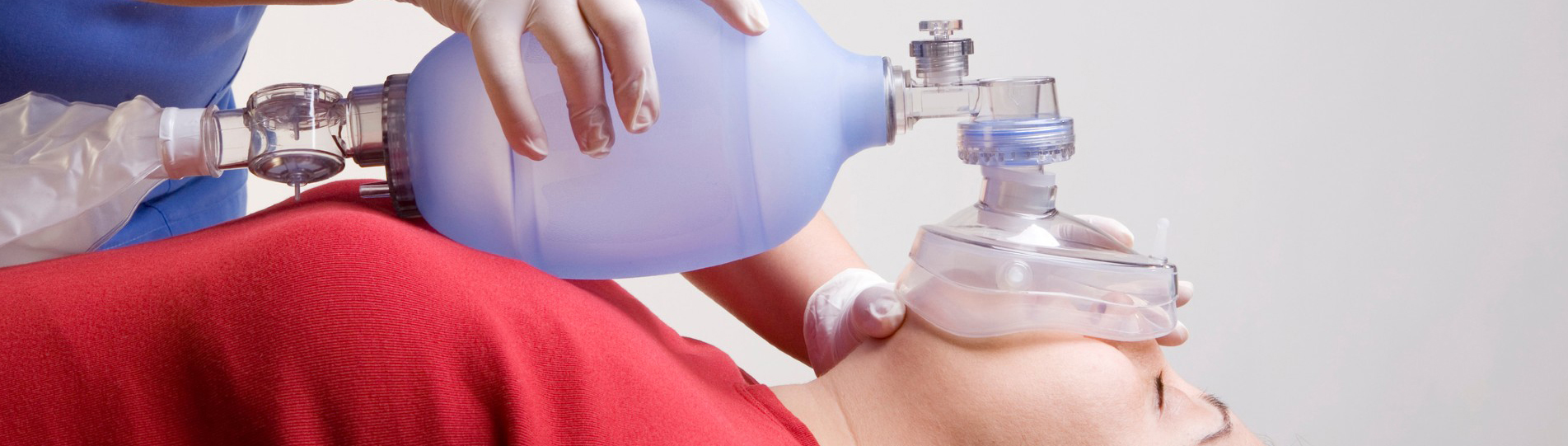

Önünüzde bir hastanın yere yığıldığını ve nefes almayı bıraktığını hayal edin. İlk 60 saniyede ne yapacağınızı biliyor musunuz? İlk hamleniz: hastayı doğru pozisyona getirmek ve hava yolunu açmak. Bu basit işlem, değerli zaman kazandırır.torba-valf maskesi (BVM)Oksijen akışının devam etmesi için gereken kurtarma nefesini verir.
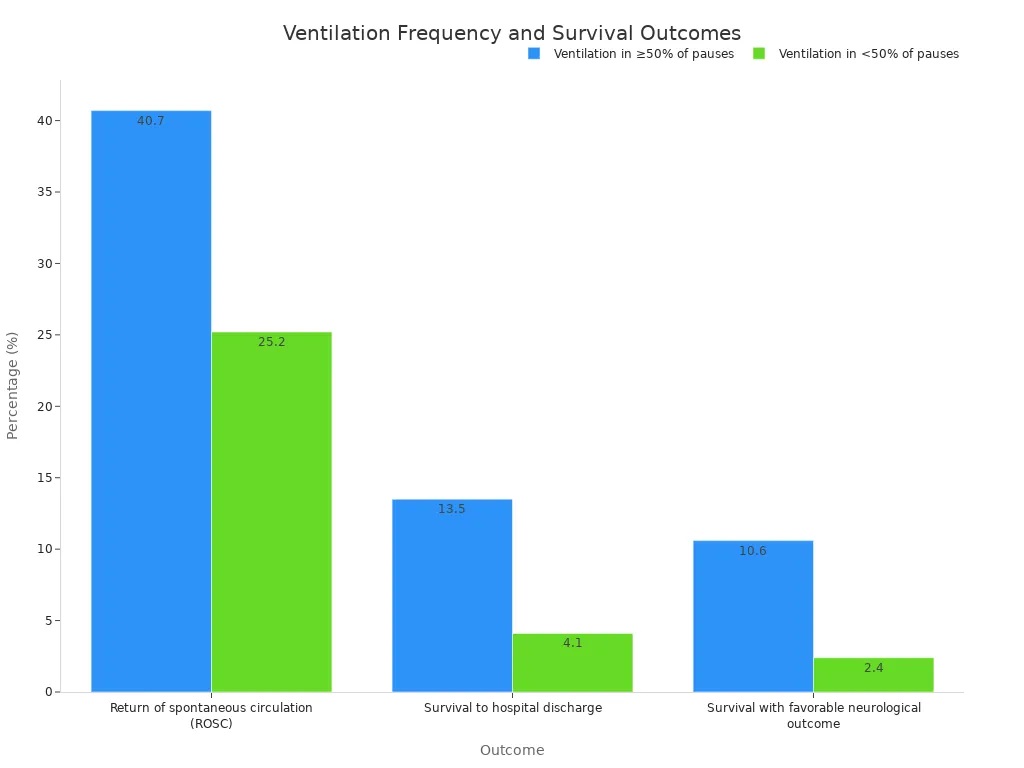
Kalp durması çalışmalarından elde edilen veriler, bunun neden önemli olduğunu gösteriyor. CPR duraklamalarının en az yarısında ventilasyon uygulanan hastalarda hastane öncesi dönemde %40,7 oranında spontan dolaşımın geri kazanılması sağlanırken, daha az sıklıkta ventilasyon uygulananlarda bu oran %25,2 oldu. Taburculuğa kadar hayatta kalma oranı neredeyse üç katına çıktı.
Bu BVM tekniğinde ustalaşmak, acil bakım için kritik bir beceridir. Adımlar, standart canlandırma kılavuzlarıyla uyumludur. Kaliteli ekipman, örneğin Bag Valve Mask (BVM) gibi, acil bakım için çok önemlidir.Tianzuo Tıp MerkeziEtkin havalandırmayı sağlar. Temel yaşam desteği eğitiminiz bu temeli oluşturur. Temel yaşam desteği sertifikası bu temelleri öğretir. Her acil durum görevlisi, bu içgüdüsel hale gelene kadar pratik yapmalıdır.
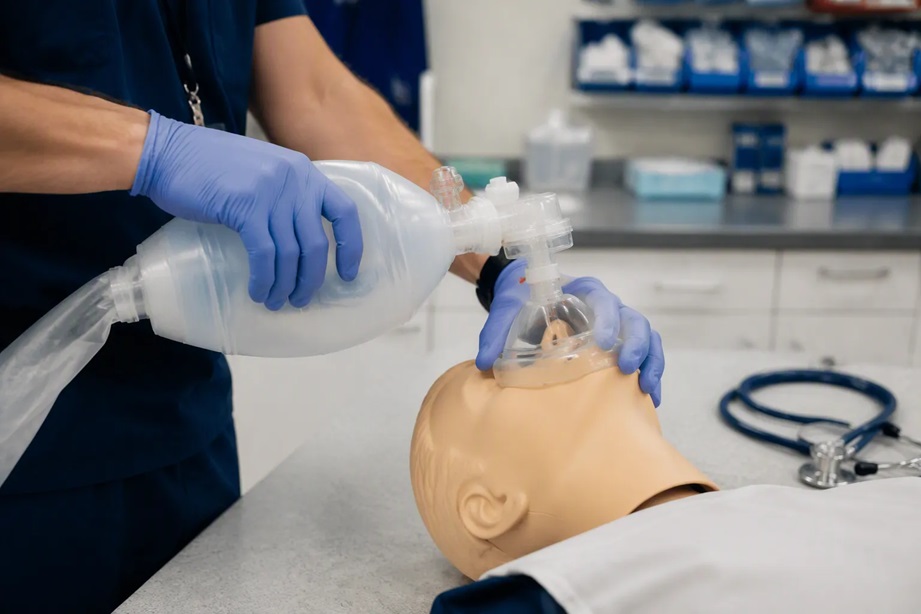
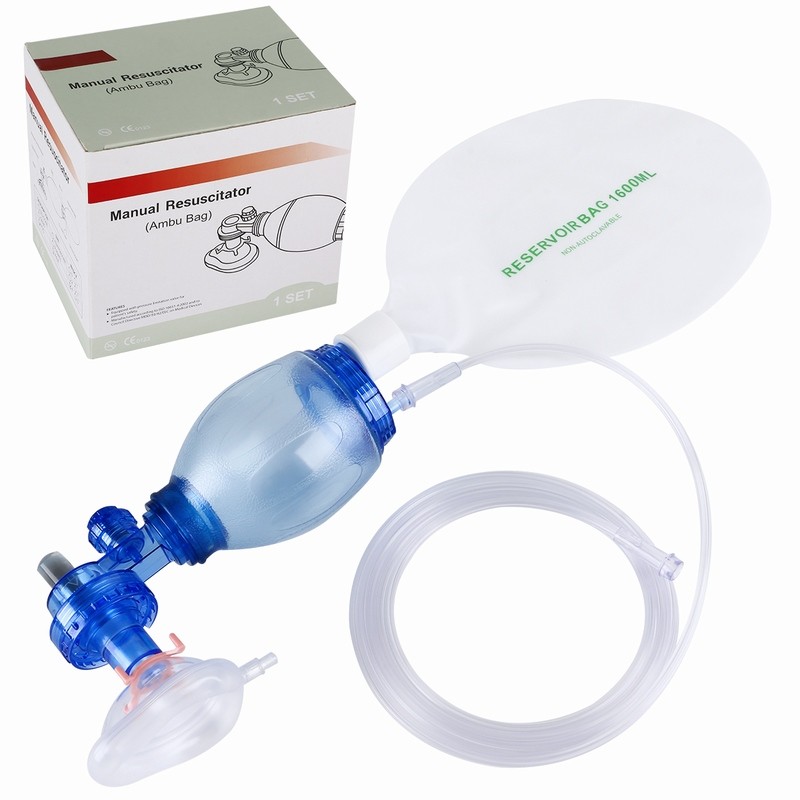
Torba-valf maskesi birmanuel canlandırma cihazıBu cihaz, kendi başlarına yeterince nefes alamayan hastalara pozitif basınçlı ventilasyon sağlar. Kendiliğinden şişen torbayı sıkarak hastanın akciğerlerine hava veya oksijen pompalarsınız, ardından nefes vermeyi sağlamak için torbayı bırakırsınız. Bu cihaz, temel hava yolu yönetimi ile gelişmiş müdahaleler arasında bir köprü görevi görerek, verdiğiniz her nefes üzerinde kontrol sahibi olmanızı sağlar.
Hava yastığı valf maskesinin her bir parçasını anlamak, acil durumlarda onu etkili bir şekilde kullanmanıza yardımcı olur.Her bir bileşen, güvenli havalandırmanın sağlanmasında belirli bir rol oynar.
|
Bileşen |
İşlev |
|---|---|
|
Oksijen rezervuar torbası |
Yüksek FiO2 dağıtımını sağlamak için oksijen depolar; oksijen azaldığında dolar.arz yeterli |
|
Oksijen girişi |
Ek oksijen sağlamak için oksijen kaynağına bağlanır. |
|
Emme valfi (üç kanatlı valf) |
Gaz akışını kontrol eder: giriş disk membranı geri akışı önler; giriş rezervuarı kapak valfi, oksijen kaynağı yetersiz olduğunda oda havasının içeri girmesine olanak tanır; çıkış rezervuarı kapak valfi, zararı önlemek için fazla basıncı serbest bırakır. |
|
Havalandırma torbası |
Kendiliğinden şişen ve teslimat için sıkıştırılan çanta.nefes alır; oksijen veya hava ile yeniden dolmak için geri çekilir. |
|
Hasta valfi |
Solunum havasını hastaya yönlendirir ve nefes verme havasını hastadan uzaklaştırarak tekrar solunmasını önler; solunum ve nefes verme portlarını içerir. |
|
Basınç tahliye vanası |
Özellikle çocuk modellerinde aşırı basıncı önler. |
|
PEEP valfi |
Pozitif son nefes verme basıncını korumak için nefes verme portuna bağlanır. |
Havalandırma torbası her sıkıştırmadan sonra otomatik olarak geri çekilerek taze gaz çeker. Tek yönlü valf sistemi, nefes verilen havanın içeri giren oksijenle karışmadan dışarı çıkmasını sağlar. Kullanmadan önce her bileşeni, özellikle de valfleri kontrol etmelisiniz, çünkü sıkışmış bir kapak tüm havalandırma sürecini tehlikeye atabilir.
Birçok kritik durumda balonlu maske (BVM) canlandırma cihazına başvuracaksınız. Solunum yetmezliği listenin başında gelir; hastanın nefes alması yeterli oksijen seviyesini koruyamayacak kadar sığ veya zayıf olduğunda. Kalp durması, göğüs kompresyonlarının tek başına beynin ihtiyaç duyduğu oksijeni sağlayamaması nedeniyle, CPR sırasında acil BVM ventilasyonu gerektirir. Ayrıca, entübasyondan önce ön oksijenasyon için de cihazı kullanırsınız; bu işlem sırasında bir güvenlik tamponu oluşturmak için hastanın akciğerlerini yüksek konsantrasyonlu oksijenle doldurursunuz.
BLS eğitiminiz, bu senaryoları hızlı bir şekilde tanımayı vurgular. Yetersiz solunumu tespit ettikten saniyeler içinde BVM ventilasyonuna başlama kararı verilmelidir. Bu müdahalenin geciktirilmesi, hastanın hayatta kalma şansını azaltır. Her durumda hedefiniz aynı kalır: kesin hava yolu yönetimine hazırlanırken etkili bir şekilde oksijen vermek. Elinizde tuttuğunuz ambu torbası, hayatta kalma zincirinde kritik bir halkayı temsil eder ve hava yolu yönetimi, maskenin doğru yerleştirilmesi ve sızdırmazlığının sağlanmasıyla başlar.
Tek bir nefes vermeden önce, ekipmanınızı ve hastanızı hazırlamalısınız. Hava yolu yönetiminin bu aşaması, BVM ventilasyonunuzun başarılı olup olmayacağını belirler. Etkili BVM ventilasyonu dikkatli hazırlık gerektirir.
İlk göreviniz doğru maske boyutunu seçmektir. Yetişkin, çocuk ve bebek maskeleri şekil ve hacim bakımından farklılık gösterir. Kötü oturan bir maske boşluklara ve sızıntılara neden olur. Torba valf maskesinin her bileşenini görünür hasar açısından inceleyin. Torbayı sıkın ve tamamen geri çekilmesini izleyin. Bu, torba valf maskesinin bütünlüğünü doğrular. Torbayı sıkıştırarak ve valfin doğru şekilde açılıp kapandığını doğrulayarak emniyet valfini test edin. Sızıntılara neden olabilecek çatlaklar, yırtıklar veya aşınmış yastıklama açısından yüz maskesini inceleyin. Tutarlı performans, sızıntısız bir sisteme bağlıdır.
Kendiliğinden şişen torbayı, uygun boyuttaki maskeyi, oksijen hortumunu ve rezervuarı birleştirin. Oksijen kaynağını bağlayın ve akış hızını 10-15 L/dk olarak ayarlayın. Tüm bağlantıları sıkıca sabitleyin. Gevşek oksijen hortumu kullanım sırasında kopabilir. Burada önemli bir saklama uyarısı geçerlidir: Torba-Valf-Maske (BVM) canlandırma cihazı katlanabilir şekilde tasarlanmamışsa, uzun süre sıkıştırılmış halde saklanması torbanın esnekliğini azaltabilir. Bu, acil durumlarda etkinliği tehlikeye atar. Çocuk modellerinde yaygın olan basınç tahliye valfleri, akciğerlerin aşırı basınçlanmasını önler. Bir baypas klipsi, klinik olarak daha yüksek basınca ihtiyaç duyulduğunda manuel geçersiz kılmaya olanak tanır. Temel yaşam desteği (BLS) eğitiminiz bu ayrıntıları incelemeyi içermelidir. İyi BLS alışkanlıkları, gerçek acil durumlarda zaman kazandırır.
Hastayı sert ve düz bir yüzeye sırt üstü yatırın. Bu pozisyon, hava yoluna erişmenizi sağlar. Uygun hava yolu pozisyonlandırma tekniklerini kullanarak hava yolunu açın. Travma geçirmemiş hastalar için, başı geriye doğru eğme-çeneyi yukarı kaldırma manevrasını kullanın. Alnına bastırarak başı geriye doğru eğin. Parmak uçlarınızla çeneyi öne doğru kaldırın. Bu hareket, dili boğazın arkasından uzaklaştırır.
Omurga yaralanmasından şüphelenilen hastalarda bunun yerine çene itme manevrasını kullanın. Parmaklarınızı çene açısının arkasına yerleştirin ve başı eğmeden çeneyi öne doğru kaldırın. Her iki teknik de mekanik avantaj için kemik çıkıntılarını kullanır. Dilin altındaki yumuşak dokuları sıkıştırmaktan kaçının. Bu, tıkanmaya neden olabilir.
Maskeyi doğru şekilde yerleştirin. Dar ucunu burun köprüsünün üzerine yerleştirin. Maske, herhangi bir boşluk kalmaması için burun ve ağzı tamamen örtmelidir. Hasta dişsiz ise, protezlerin yerinde bırakılması maskenin sızdırmazlığını artırabilir. Nazofaringeal ve orofaringeal yardımcı cihazlar, dili ve yumuşak dokuları öne doğru itmeye yardımcı olur. Bunlar özellikle tepkisiz hastalarda faydalıdır. Tekniğiniz, her nefeste göğüs yükselmesini kontrol etmeyi içermelidir. Bu, BVM ventilasyonunuzun etkili olduğunu doğrular. Güvenilir üreticilerin Bag Valve Mask'leri (BVM) tutarlı performans sağlar.
Tek başına balonlu valf maskesi kullanmak önemli bir zorluk teşkil eder. Hava yolunu yönetmeli, maskeyi sızdırmaz hale getirmeli ve aynı anda balonlu valfi sıkmalısınız. Bu tek kurtarıcı tekniğinde ustalaşmak, temel yaşam desteği (BLS) becerilerinin başında gelir. Başarınız iki kritik eyleme bağlıdır: hava geçirmez bir sızdırmazlık sağlamak ve nefesleri hassas bir kontrolle vermek.
The foundation of effective bvm ventilation is a perfect mask seal. Without it, air escapes, and your efforts fail. The E-C clamp technique provides the mechanical advantage you need for one-handed control. Form a "C" with your thumb and index finger. Place these digits on the top of the mask, applying gentle downward pressure over the bridge of the nose and the bony part of the chin. Your remaining three fingers form an "E." Hook these fingers under the angle of the patient's jaw, along the bony ridge.
Your primary action is to lift the jaw upward into the mask. Do not push the mask down onto the face. Pushing the mask down often distorts the seal and can occlude the airway. Lifting the jaw pulls the tongue and soft tissues forward, opening the airway naturally. This lift creates the space for air to flow. Proper mask placement is confirmed when the mask covers the nose and mouth completely, with the cushion forming a seal against the skin.
Common errors during this process directly compromise ventilation. You must recognize and avoid them.
|
Error |
Impact on Ventilation |
|---|---|
|
Applying pressure to soft tissues of the neck |
Can occlude the airway, impairing ventilation. |
|
Pushing the mask down instead of lifting the jaw |
Can occlude the airway, reducing airflow. |
|
Squeezing the bag too hard or too fast |
Causes stomach insufflation, aspiration risk, and decreased cardiac output, compromising effective ventilation. |
Your goal is a stable, leak-free connection. A high-quality Bag Valve Mask (BVM) with a pliable, conforming cushion makes this seal easier to achieve and maintain.
With a secure seal established, you now focus on the breath itself. Your left hand maintains the E-C clamp. Your right hand squeezes the self-inflating bag. Compress the bag smoothly and deliberately. Aim to deliver each breath over a full second. Watch for the patient's chest to rise. This visible rise is your immediate feedback for adequate tidal volume.
You must control the volume and rate. Squeeze only one-third to one-half of the bag's total volume for an adult. A full compression forces too much air too quickly. This leads to gastric insufflation, where air enters the stomach. A distended stomach increases the risk of vomiting and aspiration. It also pushes against the diaphragm, reducing lung capacity. After each breath, allow the bag to recoil fully before delivering the next. Full recoil ensures the bag refills with oxygen.
Control your ventilation rate. For a patient with a pulse but absent breathing, provide one breath every 5 to 6 seconds. This equals 10 to 12 breaths per minute. During cardiac arrest with ongoing CPR, you will follow the 30:2 compression-to-ventilation ratio. In either case, a slow, measured pace is critical. Rapid, forceful bag squeezes are dangerous. They can decrease cardiac output by raising intrathoracic pressure, which impedes blood return to the heart.
The limitations of the one-person method are important to understand.
One-rescuer BVM ventilation with minimal training fails to deliver adequate tidal volumes, while two-rescuer BVM ventilation delivers tidal volumes more than recommended and comparable to those seen with endotracheal intubation. Therefore, two-rescuer BVM is more effective for initial resuscitation.
This evidence highlights a key point. The single-rescuer technique is physically demanding. Fatigue can quickly degrade your mask seal and the quality of your squeezes. Your bls training prepares you to use this method when you are alone. You should always call for help to transition to a two-person technique as soon as possible. ReliableBag-Valve-Mask (BVM) Resuscitatorssupport consistent performance, but your technique dictates the outcome. Focus on a good seal, watch for chest rise, and deliver slow, steady breaths to provide safe, effective positive-pressure ventilation.
When you integrate bvm ventilation into CPR, your timing matters. The goal is to deliver oxygen without interrupting blood flow. Data from a multicenter study shows the impact of effective ventilation. Patients who received lung inflation in at least half of the chest compression pauses achieved 40.7% return of spontaneous circulation. Those with less frequent ventilation reached only 25.2%. Survival to hospital discharge nearly tripled, from 4.1% to 13.5%.
Your technique during CPR follows a specific sequence. Deliver one bvm breath over one second. Watch for the chest to rise visibly. Provide only enough air to achieve this rise. Avoid over-ventilating, as excessive pressure increases intrathoracic pressure and reduces blood return to the heart. If an advanced airway is in place, you switch to continuous compressions. Give one breath every six seconds, at a ventilation rate of 10 breaths per minute, without synchronizing with compressions. A Bag-Valve-Mask (BVM) Resuscitator connected to high-flow oxygen supports this rhythm. Your bls training emphasizes minimizing interruptions in chest compressions. Every pause reduces perfusion to the brain and heart. Consistent chest movement and end-tidal CO₂ monitoring confirm effective ventilation.
The 30:2 compression-to-ventilation ratio is the standard for adult CPR. You perform 30 chest compressions, then pause briefly to deliver 2 breaths. This cycle repeats without delay. Evidence from ILCOR guidelines supports this ratio over alternatives like 15:2.
|
Outcome |
30:2 vs 15:2 Effect Estimate |
|---|---|
|
Favorable neurological function |
RR 1.34 (95% CI 1.02–1.76) |
|
Survival |
RR 1.37 (95% CI 1.19–1.59) |
|
Return of spontaneous circulation |
RR 1.11 (95% CI 1.00–1.23) |
The 30:2 ratio prioritizes chest compressions. By limiting pauses to 2 breaths, you maintain blood flow while still providing ventilation. Each breath should last one second. Squeeze only one-third to one-half of the bag volume. This prevents gastric insufflation and maintains cardiac output. During cardiac arrest, a two-person bvm technique is far more effective. One rescuer holds the mask seal while the other squeezes the bag. This reduces fatigue and delivers more consistent tidal volumes. Your bls certification should include practice with both single-rescuer and two-person techniques. Mastering this ratio during CPR ensures you balance ventilation with circulation, giving the patient the best chancefor survival.
When a second rescuer arrives, you should transition immediately to the two-person approach. This method transforms your bvm from a challenging solo task into a coordinated team effort. The two-rescuer technique dramatically improves the quality of bvm ventilation and represents the standard of care in resuscitation scenarios. Your bls training should emphasize this transition as a priority once help arrives.
The two-rescuer technique assigns distinct responsibilities to each team member. Rescuer 1, the Airway Manager, positions at the patient's head. This rescuer uses both hands to secure the mask with a double E-C clamp technique. Your thumbs and index fingers form a "C" shape on the mask surface. Your middle, ring, and little fingers form an "E" along the jawline to lift the mandible upward. You hold the mask stable on the face, lifting the jaw toward the mask rather than pressing the mask down. This action creates a reliable seal without compressing soft tissues. You must reassess the seal after every breath to maintain effectiveness.
Rescuer 2, the Bag Handler, manages the ventilation bag. This rescuer delivers slow, controlled squeezes and stops when visible chest rise occurs. You watch the patient's chest carefully for adequate rise and check for air leaks around the mask. You avoid forceful breaths that cause gastric inflation. Your body mechanics matter: maintain a comfortable position without twisting or reaching awkwardly.
|
Rescuer |
Specific Duties |
|---|---|
|
Rescuer 1 (Airway Manager) |
Positions at the patient's head;uses double E-C clamp; holds mask stable; lifts jaw toward mask; reassesses seal after each breath |
|
Rescuer 2 (Bag Handler) |
Delivers slow, controlled squeezes; stops at visible chest rise; watches for leaks; avoids forceful breaths; maintains proper body mechanics |
The two-rescuer technique offers clear advantages over the single-rescuer method. You achieve a better mask seal because one person dedicates both hands to airway management. This eliminates the struggle of maintaining the E-C clamp while simultaneously squeezing the bag. The result is more consistent tidal volumes with each breath.
Rescuer fatigue decreases significantly. In the one-person method, your hands tire quickly, degrading the seal quality. With two rescuers, each person focuses on one task, sustaining high performance for longer periods. This matters during prolonged resuscitation efforts where quality degrades over time.
Coordination between rescuers follows a specific sequence:
Rescuer 1 performs 30 chest compressions, counting aloud to maintain rhythm.
Rescuer 2, positioned at the head, holds the bag-mask with a C-shaped grip using thumb and index finger to seal the mask, while remaining fingers lift the jaw to open the airway.
Rescuer 2 administers two breaths, each lasting one second, while observing chest rise.
Rescuers switch duties every two minutes, with the rescuer performing compressions calling out "switch."
Counting out loud helps both rescuers anticipate breaths and maintain the correct compression-to-ventilation ratio. This verbal coordination prevents missed breaths or delayed compressions. Your bls training should include practice with this switching protocol to build muscle memory.
The two-rescuer technique also reduces the risk of over-ventilation. With one person dedicated to watching chest rise, you can stop each squeeze precisely when the chest reaches full expansion. This prevents the gastric insufflation and decreased cardiac output associated with excessive pressure. Bag-Valve-Mask (BVM) Resuscitators with clear markings help the Bag Handler gauge appropriate squeeze volumes.
Evidence supports this approach strongly. One-rescuer bvm ventilation with minimal training fails to deliver adequate tidal volumes. Two-rescuer bvm ventilation delivers tidal volumes more than recommended and comparable to those seen with endotracheal intubation. Therefore, two-rescuer bvm ventilation is more effective for initial resuscitation. When a second rescuer is available, this method is always the recommended approach. Your Bag Valve Masks (BVM) equipment performs best when paired with proper two-person technique. Master this coordination through regular practice, and you will provide safer, more effective ventilation during critical emergencies.
You must confirm your bvm delivery is working. The most reliable indicator remains visible chest rise and fall. As one clinical educator warns, "If you do not see the patient's chest rise and fall, your seal is not tight or the airway is not open, and the patient is not receiving the life-saving oxygen they need." Monitor oxygen saturation. A rising SpO₂ reading confirms effective ventilation. Watch for heart rate normalization. In bradycardic patients, an improving heart rate signals adequate oxygenation. Check for improved skin color as circulation returns. Your bls training teaches you to reassess these signs of effective ventilation continuously. Do not assume your technique is correct without verifying these indicators.
Even trained professionals make mistakes. A study by Culbreth and Gardenhire (2021) inHeart & Lungfound that respiratory therapists frequently fail to meet recommended ventilation parameters, including tidal volume and rate. Underventilation often results from a poor mask seal. Overventilation occurs when you squeeze too hard or too fast. Both errors reduce the effectiveness of your bvm ventilation.
|
Pitfall |
Corrective Action |
|---|---|
|
Over-ventilation |
Deliver each breath overone second. Squeeze only one-third to one-half of the bag volume. |
|
Poor mask seal |
Use the E-C clamp technique. Lift the jaw into the mask. Grasp bone, not soft tissue. |
|
Incorrect head positioning |
Reapply the head tilt-chin lift or jaw thrust maneuver to open the airway. |
|
Failure to monitor |
Check chest rise, SpO₂, and heart rate after every breath cycle. |
Over-ventilation raises intrathoracic pressure and decreases cardiac output. Control your driving pressure. Use a gentle squeeze over the full one-second inspiratory time. Allow complete exhalation by following the three-second rule. This prevents gas trapping and maintains proper ventilation.
Poor mask seal is the most common cause of underventilation. If you grasp the soft tissue beneath the mandible, you push the tongue into the posterior pharynx and worsen obstruction. Pull the mandible into the mask rather than pushing the mask onto the face.
Optimize airflow with airway adjuncts. An oral or nasal airway creates a consistent pathway that promotes laminar flow and reduces turbulence. If ventilation remains inadequate, the tongue may be obstructing the airway. Insert an adjunct to displace the tongue forward.
Monitor bag compliance. If the bag feels stiff, lung compliance is low. If pressure builds quickly, resistance is high. Adapt your technique accordingly. For high-resistance conditions like asthma, extend exhalation times. For low-compliance conditions like CHF, consider applying PEEP. Your bag valve mask technique must adapt to the patient's physiology.
Your bls training provides the foundation. Regular practice on mannequins builds muscle memory. Reliable Bag-Valve-Mask (BVM) Resuscitators support consistent performance, but your technique determines the outcome.
Mastering the bag valve mask requires more than reading. You must practice each step until it becomes instinct. Prepare your equipment. Position the patient. Seal the mask with the E-C clamp technique. Ventilate slowly and monitor the chest rise. A good seal forms the foundation of effective bvm ventilation. Over-ventilation causes harm. Remember the goal: slow and steady breaths. Your ambu bag skills need regular practice on mannequins. This builds muscle memory for real emergencies. Enroll in bls or ACLS training. These courses provide hands-on training with professional instructors. Keep your ambu device ready for immediate use. Reliable equipment like Bag-Valve-Mask (BVM) Resuscitators supports your cpr efforts. Your bls certification prepares you for this critical intervention.
Watch the patient's chest. Each breath should take one full second. If you deliver more than 10-12 breaths per minute for a patient with a pulse, you're going too fast. Rapid ventilation causes stomach inflation and reduces blood flow to the heart.
Stop ventilation immediately. Turn the patient's head to the side. Clear the airway with suction or a finger sweep. Reposition the head and resume bvm ventilation. Check that the mask seal remains intact before continuing. This prevents aspiration into the lungs.
No. Pediatric patients require smaller mask sizes and lower bag volumes. Use a pediatric-specific Bag-Valve-Mask (BVM) Resuscitator with a pressure relief valve. Deliver breaths gently, watching for subtle chest rise. Over-ventilation harms children faster than adults due to their smaller lung capacity.
Assign one rescuer to hold the mask seal during transport. That person focuses only on maintaining the E-C clamp position. Another rescuer squeezes the bag. This division of roles keeps the seal stable while the stretcher moves. Practice this coordination during your bls training.
Cep tipi maske, nefesinizden çıkan havayı kullanarak yaklaşık %16 oksijen sağlar. Torba valf maskesi ise bir oksijen kaynağına bağlanarak %100'e kadar oksijen sağlar. Torba valf maskeleri (BVM) ayrıca daha iyi tidal hacim kontrolü sağlar ve uzun süreli canlandırma çabaları sırasında kurtarıcının yorgunluğunu azaltır.

 IPv6 ağı desteklenir


 Türkçe
 English
 فارسی
فارسی français
 Deutsch
 русский
 italiano
 español
 português
 العربية